Street Food, Fine Touch: How Texas Food Truck Chefs Are Rewriting the Rules of the Dining Experience

Photo by Photo by Anderson Schmig on Unsplash on Unsplash
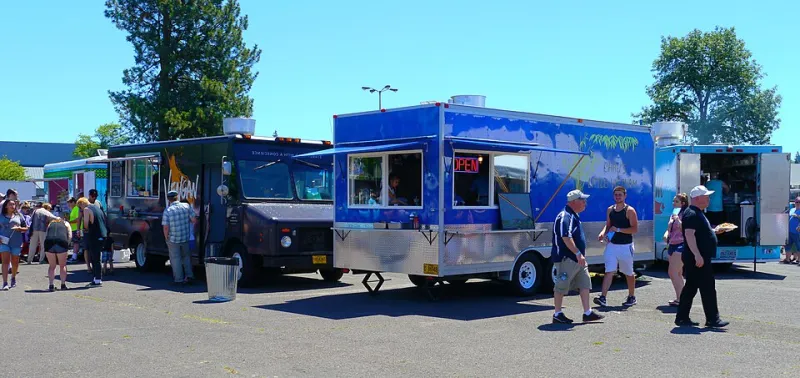
There's a moment that keeps happening at food truck festivals across Texas. Someone walks up to a service window expecting a quick bite — something wrapped in foil, maybe a napkin tucked underneath — and instead receives a plate that stops them cold. A smear of housemade aioli, a microgreen garnish, a protein rested and sliced at an angle like it just came out of a proper kitchen. They look at the truck. They look at the plate. They pull out their phone.
That moment? It's not an accident. It's the result of deliberate, creative work by a generation of food truck operators who've decided that "mobile" doesn't have to mean "minimal."
The Constraints Are the Canvas
Anyone who's cooked in a food truck knows the reality: tight quarters, limited equipment, no walk-in cooler, and a service window that doesn't exactly lend itself to tableside finesse. For most operators, those constraints define the ceiling. For a growing number of Texas vendors, they've become the creative brief.
Marcos Delgado, who runs Fuego Fino out of San Antonio, spent eight years cooking in upscale Mexican restaurants before buying his truck three years ago. He didn't leave the fine dining mindset behind — he compressed it.
"In a restaurant, you have 45 minutes to build a guest's experience," he says. "On a truck, you have maybe 90 seconds at the window and however long they're standing with the plate. So every single element has to do more work."
For Marcos, that means sauces made in small batches each morning, garnishes that serve a flavor purpose rather than just decoration, and proteins cooked to precise temperatures despite working on a flat-top that he's recalibrated more times than he can count. His birria consommé — served in a ceramic cup, not a paper one — has become something of a legend on the San Antonio festival circuit.
Plating With Purpose
The shift toward intentional plating is one of the most visible signs that food truck cuisine is evolving. It's not about making food look Instagram-worthy for its own sake (though that doesn't hurt). It's about communicating to the guest that care went into what they're holding.
Jasmine Tran, the chef-owner behind Lemongrass & Smoke in Austin, describes her plating philosophy as "controlled chaos." Her Vietnamese-Texas fusion dishes arrive in shallow bowls with components arranged to guide how you eat them — the pickled vegetables on one side, the herb bundle on the other, the protein centered and sauced just before service.
"I want people to know where to start," she explains. "Even if they're standing at a picnic table, I want them to feel like they're being guided through the dish."
Jasmine invested in a set of uniform service vessels — a mix of small ceramic plates and bamboo trays — that she brings to every festival. The upfront cost raised eyebrows among fellow operators, but her repeat customer rate and average ticket price have both climbed steadily since she made the switch.
Curated Spaces in Unexpected Places
The experience doesn't stop at the window. A handful of Texas food truck operators have started treating the space around their trucks with the same attention they give the food itself.
At larger festivals, you'll increasingly find vendors who've brought their own lighting, branded signage, and even small lounge setups — mismatched chairs, a low table, a chalkboard menu with that evening's specials written in careful script. It feels less like a food court and more like a pop-up restaurant that happens to be parked on grass.
Derek Okafor of The Lowcountry Texan, a Houston-based truck blending Gulf Coast and Cajun influences, started setting up what he calls his "porch" at festivals about two years ago. A few folding wooden chairs, a string of Edison bulbs, and a small cooler of complimentary sparkling water for guests waiting on their order.
"People tell me it feels like eating at a friend's house," Derek says. "That's the whole point. I'm not trying to be a restaurant. I'm trying to be better than one in the ways I actually can be."
Pairing Menus and Multi-Course Thinking
Perhaps the boldest move in this culinary evolution is the pairing menu — a concept that, until recently, felt firmly out of reach for mobile food service.
Some Texas vendors are now offering curated two- and three-course progressions at festivals, either as a preset ticket add-on or as a suggested sequence printed on their menu boards. Think: a small amuse-bouche-style bite to start, a main course, and a dessert that was designed to complement rather than just follow the savory courses.
At Texas Food Truck InFest, this trend has shown up in some genuinely memorable ways. One vendor offered a smoked salt dark chocolate bark as a closer to a spice-forward lamb dish — the pairing intentional, the contrast striking. Another built a three-item menu around a single heirloom tomato variety sourced from a Hill Country farm, each preparation showcasing a different technique.
These aren't gimmicks. They're the result of chefs thinking about the full arc of a meal, not just a single transaction.
How to Approach a Food Truck Like a Diner, Not a Drive-Through
If you're heading to a food truck festival and want to get the most out of vendors who are operating at this level, a few simple shifts in approach go a long way.
Slow down at the menu board. Vendors putting this kind of effort into their food often have context written right there — flavor notes, sourcing details, suggested pairings. Take 30 seconds to actually read it.
Ask a question. These chefs love talking about their food. A simple "what do you recommend starting with?" or "is there a pairing you'd suggest?" can unlock a whole different conversation and a better meal.
Treat the plate like a plate. Find a spot to sit, take a breath, and actually look at what you've been handed before diving in. The chef arranged it that way for a reason.
Go back. The best food truck meals at a festival often happen in rounds — a bite here, a course there, returning to a vendor for the dessert you skipped the first time. That's how these chefs are designing their menus to be experienced.
The Line Is Blurring, and That's a Beautiful Thing
The old mental categories — street food over here, fine dining over there — are getting harder to defend with every festival season. Texas food truck operators are proving, truck by truck and plate by plate, that the quality of an experience has nothing to do with whether there are walls around it.
The truck is the kitchen. The festival grounds are the dining room. And the chefs behind those windows? They're some of the most creative culinary minds in the state, working with constraints that would make most restaurant cooks sweat — and turning out food that makes people stop, look, and reach for their phones.
Roll in hungry. Eat with intention. That's the whole idea.