Passed Down Through the Window: The Family Recipes Driving Texas Food Truck Legacies
There's a handwritten index card taped inside Rosa Garza's prep station that has survived three moves, two trucks, and one grease fire. On it, in faded blue ink, is her grandmother's recipe for caldo de res — a beef and vegetable soup so deeply tied to her family's roots in Nuevo León that Rosa says she couldn't imagine serving anything else at her San Antonio truck, Abuela's Rueda.
"That card goes wherever the truck goes," she says, laughing. "It's basically the business license as far as I'm concerned."
Across Texas, a quieter story is unfolding alongside the flashier narratives of culinary innovation and social media stardom. For a growing number of food truck operators, the window isn't just a place to exchange tacos for cash — it's a portal connecting the past to the present, one plate at a time.
More Than a Menu
When people talk about Texas food truck culture, the conversation usually gravitates toward bold flavors, creative fusion, and entrepreneurial hustle. And sure, all of that is real. But spend enough time at a festival talking to the people behind the trucks, and another thread emerges: a surprising number of operators launched their businesses specifically to keep a family recipe alive.
Take Marcus Webb, who runs Webb's Smoke House out of a retrofitted trailer in East Austin. Marcus learned to smoke brisket from his grandfather, who learned from his father on a farm outside Bastrop. When Marcus lost his grandfather in 2019, the idea of letting that knowledge disappear felt unbearable.
"I didn't want to just remember him — I wanted to cook him," Marcus says. "That probably sounds strange, but every time I open that smoker, I feel like he's right there."
His brisket, seasoned with a dry rub that hasn't changed in four generations, has developed its own following at festivals across Central Texas. Regulars don't just come for lunch. They come because the food means something.
The Kids Are Watching
One of the most striking aspects of the generational food truck story is how often children are part of it — not as passive observers, but as active participants in the family business.
Lena Nguyen started Pho Horizon in Houston after years of watching her mother run a small Vietnamese restaurant that eventually closed during the pandemic. Rather than give up on her mother's recipes — particularly a deeply aromatic beef pho that took two days to prepare properly — Lena went mobile.
"My mom cried when she saw the truck for the first time," Lena says. "She thought those recipes were just… done. Gone."
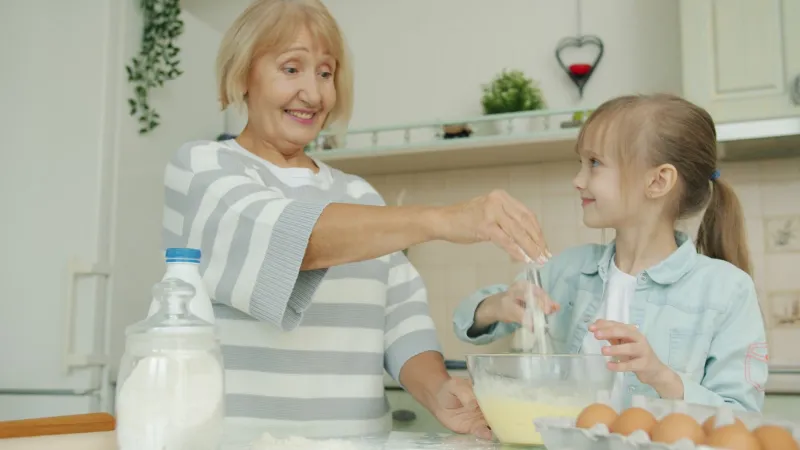
Now Lena's own daughter, twelve-year-old Mia, spends weekend festivals helping at the window, learning the prep work, and asking questions about why certain spices go in at certain times. Lena is deliberate about that education.
"I'm not forcing her into anything," she says. "But I want her to know this. Where it comes from, what it means. Whether she runs a truck someday or not, she'll carry this with her."
That kind of intentional transmission is something food historians and culinary anthropologists talk about as increasingly rare in fast-food culture. Food trucks, with their intimate scale and owner-operated nature, may actually be one of the last places where it happens organically.
When the Recipe Becomes the Brand
For some families, the heritage angle isn't just emotionally meaningful — it's also become central to how they market themselves at festivals.
The Dominguez family, who operate Three Generations Tamales out of a vibrant red truck that's become a fixture at Texas Food Truck InFest events, lean fully into their story. Their banner literally features a photograph of great-grandmother Elena Dominguez, who brought her tamale technique from Oaxaca in the 1960s. Customers regularly stop to ask about her.
"People want to know the story before they even order," says current operator Diego Dominguez, Elena's great-grandson. "And honestly, that's fine by me. I love telling it."
Diego's tamales use masa prepared the same way Elena did — hand-mixed, never machine-processed — which means longer prep times and a smaller batch size than competitors. He's turned down advice to scale up more than once.
"The minute I start cutting corners, it's not her recipe anymore," he says simply. "And then what's the point?"
Friction and Evolution
It wouldn't be honest to pretend the generational food truck story is always smooth. Families disagree. Recipes get debated. Sometimes younger operators want to update dishes that older family members consider sacred.
Rosa Garza laughs when she talks about the time she tried to add a chipotle variation to her grandmother's caldo de res.
"My mom didn't speak to me for a week," she says. "I'm not joking. A whole week."
The chipotle version was ultimately a hit with customers. Rosa now serves both — the original and the variation — but she's careful to label them clearly on the menu. The original still outsells the new version, which she finds quietly satisfying.
"Turns out people respect the real thing," she says. "You don't always have to mess with it."
Marcus Webb has navigated similar territory, adding a spicy jalapeño brisket option that his late grandfather probably would have raised an eyebrow at. But Marcus frames it as an extension rather than a replacement.
"Granddad was a practical man," he says. "He would've said: if it sells, make it. Just don't call it mine."
A Living Archive on Wheels
What makes the food truck format particularly well-suited to this kind of legacy-keeping is its accessibility. A brick-and-mortar restaurant requires significant capital, a fixed location, and a level of infrastructure that can feel daunting for families just trying to preserve something personal. A truck lowers those barriers enough that the impulse to honor a recipe can actually become a business.
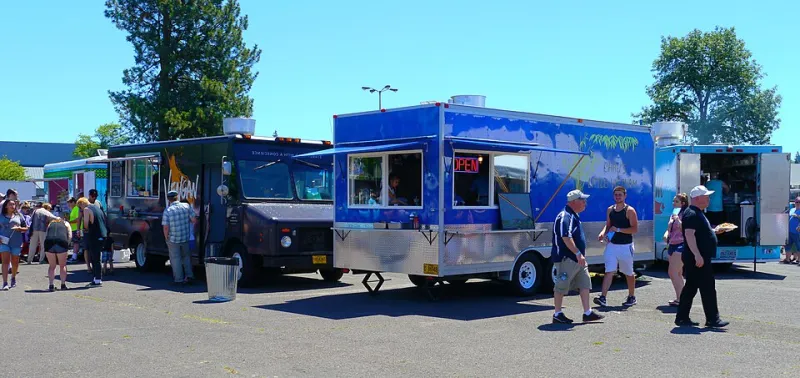
And at festivals like Texas Food Truck InFest, where dozens of trucks gather in one place, the cumulative effect is something remarkable — a rolling archive of Texas's diverse culinary heritage, from generations-old barbecue traditions to immigrant recipes that crossed borders and survived decades.
Lena Nguyen puts it simply: "My mom's pho didn't die. It just got wheels."
That might be the best summary of what these operators are doing. Not just feeding people. Not just running a business. Keeping something alive — and rolling it forward, one festival at a time.
Want to meet these vendors in person? Check our festival schedule at texasfoodtruckinfest.com and plan your visit around the trucks that matter most to you.